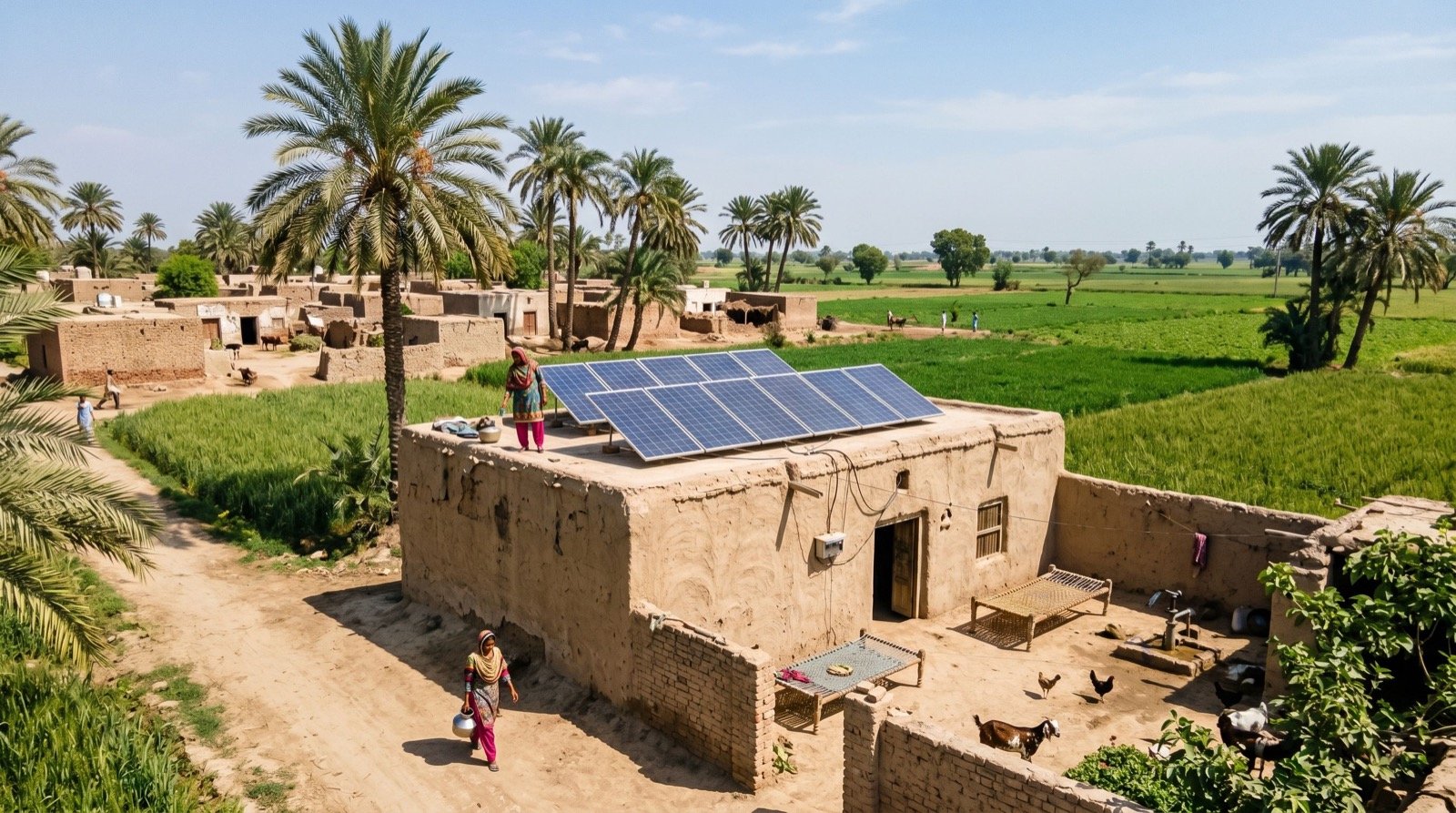
Solar Panels in Pakistan: 2026 Home Buyer’s Guide
Buying solar panels in Pakistan has shifted from a niche experiment to a mainstream household decision. With grid tariffs climbing and load-shedding still biting across Lahore, Karachi and Faisalabad, a rooftop system now pays for itself faster than almost any other home upgrade. Yet the market is crowded, and a wrong choice costs real money for 20 years.
This guide walks homeowners through what actually matters in 2026: panel types, sizing, pricing, net metering and the local pitfalls that catch first-time buyers. Read it before you sign any quotation, and you will negotiate from a position of knowledge rather than hope.
Why solar panels in Pakistan make sense in 2026
Electricity from the national grid keeps getting pricier, while panel prices keep falling. That scissor effect is the whole story. A typical Lahore household paying a heavy per-unit tariff can offset most of its daytime consumption with a modest rooftop array.
Sunlight is the other advantage. Most of Pakistan receives strong irradiation for the majority of the year, which means panels here generate more units per installed kilowatt than in much of Europe. The International Renewable Energy Agency (IRENA) consistently ranks South Asia among the most attractive regions for distributed solar.
- Lower bills: daytime loads run straight off the roof, slashing imported units.
- Load-shedding cover: paired with batteries, essentials stay on during outages.
- Rising resale value: a documented, well-installed system lifts property appeal.
- Inflation hedge: you lock in generation cost for two decades.
Types of solar panels and which suits your roof
Three panel technologies dominate the Pakistani market. Each carries trade-offs in price, efficiency and heat tolerance, so match the type to your roof space and budget rather than chasing the cheapest sticker.
Monocrystalline vs polycrystalline
Monocrystalline panels deliver the highest efficiency and perform better in tight roof spaces and high temperatures. Polycrystalline panels cost a little less per watt but need more area for the same output. For the hot summers common across Punjab and Sindh, mono panels with a good temperature coefficient are usually the smarter long-term pick.
Half-cut and bifacial modules
Modern half-cut cell designs reduce internal losses and shade impact, which matters on rooftops with water tanks or parapets. Bifacial panels capture reflected light on a flat white roof. These newer formats now ship in most quality catalogues of solar panels in Pakistan and are worth the small premium for constrained roofs.
How to size a home solar system
Sizing is where most buyers either overspend or under-deliver. Start with your actual consumption, not a salesperson’s round number. Pull twelve months of electricity bills and find your average daily units.
- Average daily units: add a year of consumption and divide by 365.
- Target offset: decide how much of that you want solar to cover.
- Apply a local yield factor: roughly four usable sun-hours per day across much of Pakistan.
- Add headroom: size up 10–15% for future appliances and panel ageing.
A practical rule of thumb: a 5 kW system suits a small family home with ACs on inverter mode, while a larger household running multiple air conditioners usually needs 8–10 kW. Reviewing completed solar projects in Pakistan of a similar size gives you a realistic benchmark for both output and cost.
Solar panel price guide for 2026
Prices move with the rupee and global module supply, but the ranges below reflect typical installed costs for quality branded systems in 2026. Treat them as a planning baseline, then collect written quotes.
| System size | Typical home | Rough installed cost (PKR) | Est. monthly saving |
|---|---|---|---|
| 3 kW | Small home, few ACs | Entry tier | Moderate |
| 5 kW | Average family home | Mid tier | High |
| 10 kW | Large home, many ACs | Upper tier | Very high |
Beware of quotes that look suspiciously cheap. They often hide thin mounting structures, undersized cables or no-name inverters that fail within a few monsoon seasons. The panel is only one line item; the balance-of-system decides how long everything lasts.
Net metering and approvals: what buyers skip
Net metering lets you export surplus daytime generation to the grid and draw it back later, effectively using the grid as a free battery. The National Electric Power Regulatory Authority (NEPRA) governs the framework, and your local distribution company processes the application.
Getting approved smoothly comes down to paperwork and a compliant installation. A few practical checks save weeks of back-and-forth:
- Confirm your connection phase matches the proposed inverter type.
- Keep the sanctioned load and system size within allowed limits.
- Use a bidirectional meter approved by your DISCO.
- Ensure the installer provides a proper single-line diagram.
One hard-won tip from real installations: photograph every stage of the mounting and wiring before the roof is sealed. If a warranty claim ever arises, that evidence settles disputes fast. Partnering with reliable local experts who handle both the install and the net-metering file removes most of this friction.
Common mistakes when buying solar panels in Pakistan
Avoiding errors is cheaper than fixing them. The most frequent regrets have nothing to do with the panels themselves and everything to do with planning.
- Ignoring shade: a single shaded module can drag down a whole string.
- Skimping on the inverter: the brain of the system deserves a quality brand.
- No maintenance plan: dusty panels in our climate lose real output.
- Unverified installer: fly-by-night crews vanish before warranties mature.
Frequently Asked Questions
How long do solar panels last in Pakistan’s climate?
Quality panels carry 25-year performance warranties and typically keep producing well beyond that. Heat and dust reduce output slightly, so a temperature-tolerant panel plus regular cleaning protects your long-term yield.
Do I need batteries with my solar panels?
Not necessarily. With net metering, many homes run grid-tied without batteries and still cut bills sharply. Add storage only if you need backup power during load-shedding or want night-time independence.
How much roof space does a 5 kW system need?
Plan for roughly 350–450 square feet of unshaded roof for a 5 kW array using modern panels. Half-cut and higher-efficiency modules let you fit more capacity into tight spaces.
Is net metering worth it for a small home?
Yes. Even a modest system benefits, because every exported daytime unit offsets a more expensive imported unit later. The application effort pays back quickly through ongoing savings.
Conclusion
Choosing solar panels in Pakistan in 2026 is less about finding the cheapest module and more about matching the right technology, correct sizing and a compliant net-metering setup to your home. Get those three right, and your rooftop becomes a 25-year asset that shrinks bills and shields you from tariff shocks.
Ready to go solar? Compare quality panels, request a tailored sizing proposal, and book a professional site survey today so your roof starts earning from the very next sunny morning.