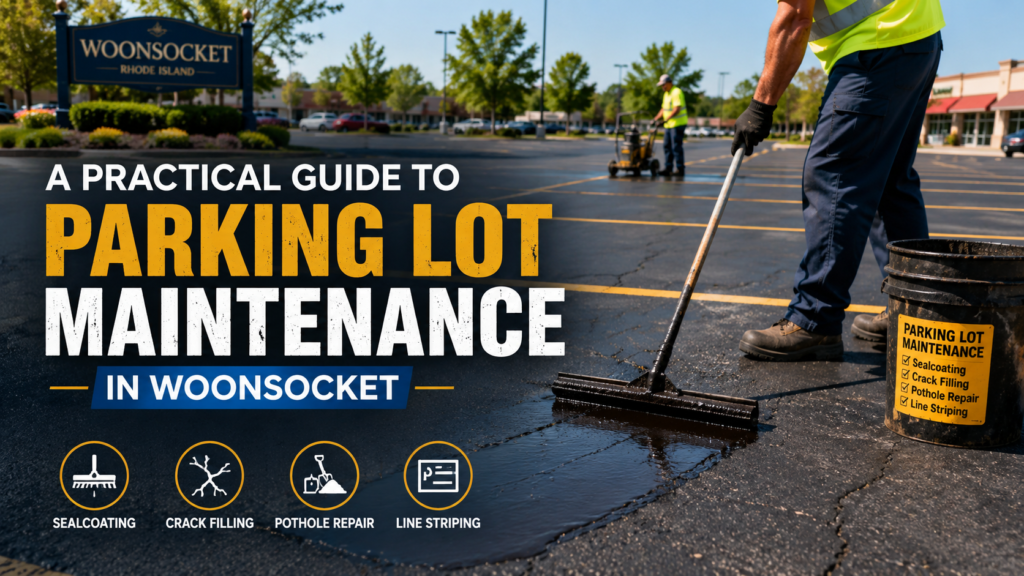
Asphalt paving is often talked about as a one-time project, but the truth is that a parking lot’s lifespan depends heavily on what happens after installation. A well-built lot that’s neglected for years will deteriorate far faster than a modestly built one that receives consistent, proactive care. In Woonsocket, where freeze-thaw cycles and road salt exposure place extra strain on pavement every winter, understanding what a proper maintenance routine looks like can add years of usable life to a Parking lot Maintenance Woonsocket and delay the need for costly reconstruction.
Why Small Problems Become Big Ones Quickly
Asphalt failure rarely happens all at once. It typically starts small, a hairline crack, a slightly worn patch of sealcoating, a low spot where water lingers a little longer than it should. Left alone, these small issues compound. Water finds its way into cracks, and during winter, that water freezes and expands, widening the crack further. Vehicle traffic continues pounding the weakened area, and what started as a surface-level imperfection becomes a structural problem that requires excavation and rebuilding rather than a simple patch. This is why most maintenance plans are built around catching and addressing small issues before they escalate.
Core Elements of a Parking Lot Maintenance Plan
Sealcoating
Sealcoating is a protective layer applied over the asphalt surface to shield it from UV rays, moisture, and chemical exposure from oil, gasoline, and de-icing salts. Most paving professionals recommend sealcoating every two to three years, though the right interval depends on traffic volume and climate exposure. Beyond protection, sealcoating also restores a clean, dark appearance that improves the overall look of a property.
Crack sealing
Cracks are inevitable in asphalt over time due to natural expansion and contraction with temperature changes, but sealing them promptly prevents water infiltration that leads to more serious base damage. Crack sealing is typically one of the most cost-effective maintenance tasks a property owner can invest in, since it directly addresses the primary cause of accelerated pavement failure.
Pothole repair
Potholes form when water penetrates the pavement and undermines the base beneath it, often accelerated by freeze-thaw cycling. Addressing potholes quickly prevents them from expanding and reduces the risk of vehicle damage or trip hazards for pedestrians.
Drainage inspection
Even a well-built lot can develop drainage issues over time as the surface settles slightly with use. Periodic inspection of low points and drainage channels ensures water continues to flow away from the pavement rather than pooling and accelerating deterioration.
Striping and signage upkeep
While not a structural concern, faded striping and signage affect both safety and the professional appearance of a property. Refreshing markings periodically keeps traffic flow clear and helps maintain accessible parking compliance.
Building a Seasonal Maintenance Schedule
Because Woonsocket experiences a full range of seasonal weather, timing maintenance tasks around the calendar tends to produce the best results. A general seasonal approach includes:
- Spring: Inspect the lot for winter damage, including new cracks and potholes that formed during freeze-thaw cycles, and address them before summer traffic increases stress on the surface.
- Summer: This is typically the ideal window for sealcoating and larger repair projects, since warm, dry weather allows asphalt sealants and patching materials to cure properly.
- Fall: Complete any remaining crack sealing and surface repairs before temperatures drop, since cold weather limits the effectiveness of many repair materials.
- Winter: Focus shifts to snow and ice management practices that minimize damage, including careful plowing techniques that avoid gouging the surface and judicious use of de-icing materials that won’t accelerate pavement wear.
Common Questions About Parking Lot Maintenance
How often should a parking lot be sealcoated?
Most professionals recommend sealcoating every two to three years, though high-traffic lots or those exposed to heavy chemical spills, like gas stations, may benefit from more frequent application. A visual inspection, checking for a faded gray appearance rather than a rich black color, is often a helpful indicator that sealcoating is due.
Is it better to patch a pothole or resurface the whole lot?
This depends on how widespread the damage is. If potholes and cracking are isolated to a small area and the base beneath the rest of the lot remains sound, targeted patching is usually sufficient. If damage is widespread across a significant portion of the lot, or if drainage problems point to a base issue, resurfacing or full replacement is typically the more cost-effective long-term solution.
Does snow plowing damage asphalt?
Improper plowing technique can damage pavement, particularly when blades are set too low and scrape directly against the asphalt surface. Using properly adjusted plow equipment and avoiding metal-edge contact with the pavement helps minimize this risk.
How can property owners tell if a drainage problem exists?
Standing water that remains for an extended period after rain, water pooling near building entrances, or ice forming in unexpected areas during winter are all signs that the lot’s grading or drainage system may need attention.
Coordinating Maintenance Around Business Operations
For commercial properties, timing maintenance work to minimize disruption to customers and tenants is an important practical consideration. Sealcoating and larger repair projects are often scheduled during lower-traffic periods, whether that means early morning hours, overnight windows, or slower business days, depending on the nature of the property. Clear signage and temporary directional guidance during maintenance work helps keep both pedestrians and vehicles moving safely around the work area, reducing the inconvenience while the necessary care is performed.
Winter-Specific Maintenance Practices
Winter presents its own distinct set of maintenance challenges for parking lots in Woonsocket. Beyond careful plow blade adjustment, choosing de-icing products thoughtfully matters as well, since some chemical de-icers can be more aggressive toward asphalt and surrounding vegetation than others. Applying de-icing materials before a storm, rather than only after ice has formed, often reduces the total amount needed and minimizes the time vehicles and pedestrians are exposed to slippery conditions. Clearing snow promptly after storms, rather than allowing it to compact into ice under continued traffic, also helps protect the pavement surface and reduces the workload for spring repairs.
The Cost of Deferred Maintenance
While maintenance requires ongoing attention, the alternative, waiting until a lot fails structurally, generally results in far more disruptive and extensive work. A lot that has been properly maintained through sealcoating, crack sealing, and prompt repairs can often be kept in good condition for a decade or more between major resurfacing projects. A neglected lot, by contrast, may require full reconstruction in half that time, since a compromised base cannot simply be patched over indefinitely.
Documenting Maintenance Over Time
Keeping records of maintenance activities, including sealcoating dates, crack sealing work, and pothole repairs, serves a practical purpose beyond simply tracking upkeep. A documented maintenance history can be useful for insurance purposes in the event of a liability claim related to a trip-and-fall incident or vehicle damage, and it also helps property owners and managers plan future maintenance budgets more accurately by understanding how quickly a particular lot tends to develop wear under its specific traffic conditions. Many property managers keep a simple log noting the date and type of each maintenance activity, along with photos of the lot’s condition at each inspection, to build this history over time.
How Traffic Volume Shapes a Maintenance Schedule
Not every parking lot wears at the same rate, and traffic volume is one of the biggest factors influencing how often maintenance tasks are needed. A lot serving a busy retail center or restaurant with constant vehicle turnover will generally show wear faster than a lightly used office parking area, even if both lots were built to the same specifications. Property owners with higher-traffic lots often benefit from shortening their sealcoating interval slightly and conducting more frequent visual inspections, particularly in areas near entrances and drive lanes where tire wear and turning stress concentrate.
Working With a Maintenance Provider
For property owners managing multiple locations or simply preferring not to track maintenance schedules themselves, working with a paving contractor on an ongoing maintenance arrangement can simplify the process considerably. This typically involves periodic inspections scheduled around the seasonal calendar, proactive recommendations when issues are spotted early, and a consistent point of contact who becomes familiar with the specific history and quirks of a given property. Establishing this kind of ongoing relationship, rather than calling a different contractor for each individual repair, often results in more consistent record-keeping and a maintenance approach that’s tailored to how a particular lot actually performs over time.
Making Maintenance Part of Property Management
For property owners and managers in Woonsocket, building a proactive maintenance routine into the annual property management calendar is one of the most effective ways to protect a parking lot investment. Regular inspection, prompt attention to small issues, and seasonal timing of larger maintenance tasks all work together to extend pavement life significantly. Approaching parking lot maintenance in Woonsocket as an ongoing responsibility, rather than a reactive measure taken only after visible damage appears, tends to produce far better long-term results for the property and its budget alike.